
Plenty of Kapiti Coast homes started life as baches or family homes in the 1950s, 60s and 70s. They’ve been added to, renovated and repainted over the years, but the wiring behind the walls is often the original. Cable doesn’t last forever, and the way we use power today looks nothing like it did when those homes were built. If you own one of them, a house rewire on the Kapiti Coast may be closer than you think.
A house rewire is a big job, but it’s one of the best investments you can make in an older home. Here are the signs it might be time, and what’s involved if it is.
Why old wiring wears out
Electrical cable is made of copper conductors wrapped in insulation. Over decades, that insulation dries out, becomes brittle and can crack, especially in hot roof spaces. Homes wired before the 1960s often used rubber-insulated cable, which crumbles with age and can leave bare copper exposed. Some very old homes still have fabric-covered flex in places.
Even newer plastic-sheathed cable can be pushed past its limits. A circuit designed in 1975 for a few lights and a radiogram is now running TVs, computers, heaters and kitchen appliances, often through a tangle of multiboxes. Add in decades of DIY alterations by previous owners, and it’s easy to see why older wiring deserves a proper check.
Signs your home needs a rewire
- Lights flicker or dim when the heater, kettle or dryer switches on.
- Switches or power points feel warm, look discoloured or make a buzzing sound.
- A burning or hot plastic smell with no obvious cause. Turn off the power and call an electrician straight away.
- Fuses blow or breakers trip often, especially when several appliances run at once.
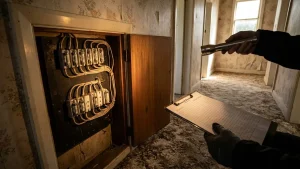
- Old rewireable fuses (the ceramic ones with fuse wire) at the switchboard.
- Rubber or fabric-covered cable visible in the roof space or under the floor.
- Not enough power points, so multiboxes and extension leads are a permanent fixture.
- A tingle when you touch a tap, appliance or light switch. Stop using it and get it checked immediately.
One sign on its own doesn’t always mean a full rewire. But if you’re ticking two or three of these boxes, it’s worth getting the wiring inspected.
Rewire or repair?
Not every older Kapiti home needs a house rewire from top to bottom. Sometimes the main cabling is in reasonable condition and the problems are limited to one circuit, a tired switchboard or a few dodgy alterations. An electrical inspection tells you which it is.
We look at the switchboard, the type and condition of the cable, the earthing, and any work that doesn’t look like it was done by an electrician. Then we give you an honest view: what’s urgent, what can wait, and whether a partial or full rewire makes sense. If you’re planning a renovation anyway, rewiring the affected rooms while the walls are open is usually far cheaper than doing it later.
What a full rewire involves
A full rewire replaces the old cabling throughout the house with new, correctly sized circuits. In most homes it also includes:
- A new switchboard with modern circuit breakers and RCD protection
- Power points where you actually need them, including kitchens, bedrooms and home offices
- Updated lighting, often switching to energy-efficient LED fittings at the same time
- Dedicated circuits for heat pumps, ovens and other heavy loads
- Testing, certification and a Certificate of Compliance when the job is done
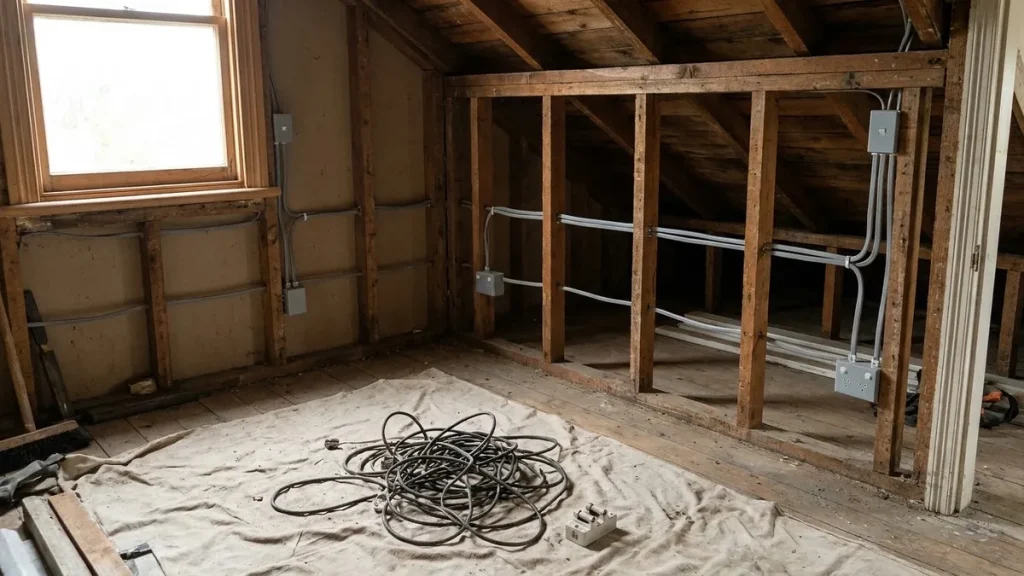
Most rewires can be done with you living in the house, working through it room by room. We access cables through the roof space and under the floor wherever we can to keep wall repairs to a minimum. Depending on the size of the home and how easy it is to get into, a rewire typically takes anywhere from several days to a couple of weeks.
Plan for the way you’ll use power next
A rewire is the perfect time to think ahead. Are you likely to add a heat pump, an electric vehicle charger or a bigger kitchen in the next few years? Planning the circuits and switchboard space now saves you paying for extra work later.
Quick answers
How long does a full house rewire take?
It depends on the size of the house and how accessible the roof space and subfloor are. Many homes take several days to a couple of weeks, and you can usually stay living there while the work is done.
How can I tell how old my wiring is?
Look at the switchboard and any cable you can see in the roof space. Ceramic fuses and rubber or fabric-covered cable point to wiring that’s decades old. An electrical inspection gives you a definite answer.
Is it worth rewiring before selling a house?
If the wiring is clearly old, buyers and their inspectors will notice. A rewire with a Certificate of Compliance can remove a common sticking point, but it’s worth getting an inspection first so you know exactly what’s needed.
Talk to your local electricians
Whittaker Electrical handles every house rewire, switchboard upgrades and electrical inspections right across the Kapiti Coast, from Levin to Pukerua Bay.
Call us on 021 975 911 or send us a message, and we’ll arrange a time to come and take a look.