
Your switchboard is the heart of your home’s electrical system. Every circuit starts there, and it’s the switchboard’s job to cut the power fast when something goes wrong. If yours is decades old, it may not be doing that job as well as it should. A switchboard upgrade is one of the most effective safety improvements for an older Kapiti home.
Here’s how to tell when a switchboard upgrade is worth doing, and what’s involved.
What a switchboard actually does
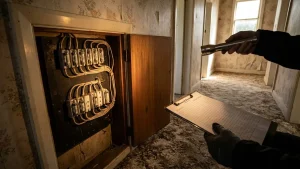
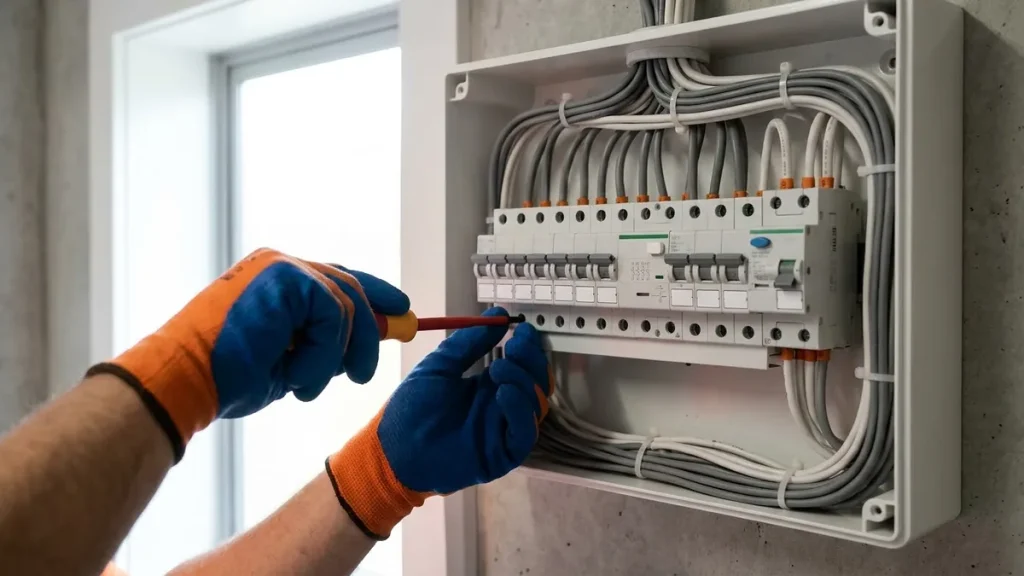
A switchboard holds the main switch, which turns off power to the whole house, plus a protective device for each circuit. In older homes those devices are fuses. In newer homes they’re circuit breakers, which switch off automatically when a circuit is overloaded or shorts out.
Modern switchboards also include residual current devices, or RCDs. An RCD watches for electricity leaking where it shouldn’t, such as through a faulty appliance or a person, and cuts the power in a fraction of a second. It’s one of the most important safety features in any home, and many older switchboards don’t have one at all.
Signs your switchboard needs replacing
- Ceramic rewireable fuses. They work, but they’re slower than modern breakers and easy to refit with the wrong fuse wire.
- No RCD protection, or only one RCD covering a couple of circuits.
- Scorch marks, heat, buzzing or a burning smell anywhere around the board. Turn off the power at the main switch and call an electrician.
- Breakers trip or fuses blow regularly, particularly when the heater or oven is on.
- No spare space for new circuits.
- An old backing board. Some older switchboards have backing panels that may contain asbestos, which needs careful handling when the board is replaced.
Adding heat pumps, EV chargers and new appliances
The most common reason we upgrade switchboards on the Kapiti Coast isn’t a fault. It’s a new appliance. Heat pumps, electric vehicle chargers, induction cooktops and spa pools all need their own circuits, and older boards often have no room left.
Before adding a big new load, it’s worth checking the switchboard can handle it. Sometimes a small upgrade is all that’s needed. Other times, replacing the whole board makes more sense, especially if you’re planning more than one new appliance over the next few years.
What a switchboard upgrade involves
On the day, we turn off the power, remove the old board and fit a new enclosure with modern circuit breakers and RCD protection. We test every circuit, check the main earth, and label everything clearly so you know what each switch does.
Work on the main switchboard is classed as high-risk electrical work, so it has to be inspected by a licensed electrical inspector. We arrange that for you and provide a Certificate of Compliance when the job is complete.
Most homes are without power for a few hours during the changeover. We’ll tell you what to expect in advance so you can plan around it.
RCDs and RCBOs: what’s the difference?
A standard RCD protects a group of circuits. If one of them has a fault, the RCD switches them all off. An RCBO combines an RCD and a circuit breaker for a single circuit, so a fault in one circuit only switches off that circuit. RCBOs cost a little more, but they mean a faulty toaster won’t take out your freezer at the same time. We’ll talk you through the options when we quote.
Quick answers
How long does a switchboard upgrade take?
Most residential switchboard upgrades we do around Kapiti are done in a day, with the power off for a few hours during the changeover. Larger or more complex boards can take longer.
Do I need a new switchboard for a heat pump?
Not always. If your board has space and is in good condition, we can often add a circuit. If it’s full or has old fuses, an upgrade is usually the safer and more practical option.
Will my power be off for long?
Usually just a few hours. We plan the work so the power is off for as little time as possible and let you know the timing beforehand.
Need a switchboard checked?
We upgrade switchboards for homes and businesses across the Kapiti Coast, often alongside heat pump installs, EV chargers and rewires.
Call us on 021 975 911 or send us a message, and we’ll arrange a time to come and take a look.