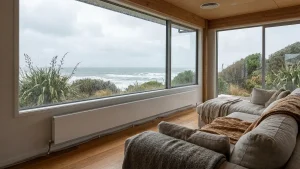

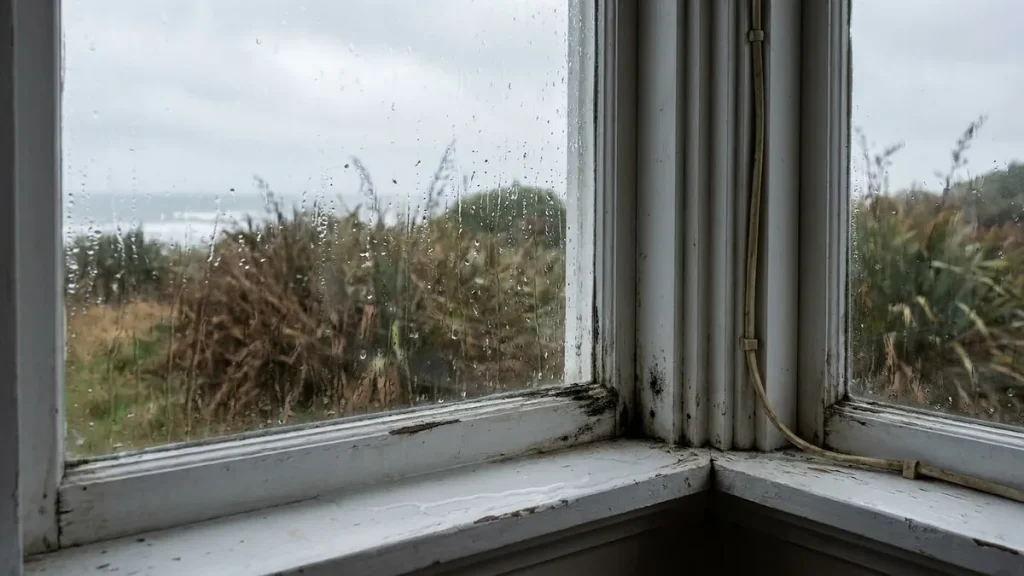
If you wake up to windows streaming with water every winter morning, you’re not alone. Condensation is one of the most common complaints in Kapiti Coast homes, and left unchecked it leads to mould, musty smells and a house that’s harder and more expensive to heat. Good home ventilation makes a big difference, especially in Kapiti’s coastal climate.
The good news is that most homes can be made much drier with the right mix of extraction, ventilation and heating.
Why condensation happens
Everyday living puts a surprising amount of moisture into the air. Showers, cooking, drying clothes inside, unflued gas heaters and even breathing all add water vapour. When that warm, moist air meets a cold surface like a window or an outside wall, it cools and turns back into water.
Coastal homes can be especially prone, with humid air and plenty of wind-driven rain. Older homes that have been insulated and draught-proofed are warmer, but they also hold onto moisture unless it has somewhere to go.
Start with extraction at the source
The most effective step is removing moisture where it’s created, before it spreads through the house.
- Bathroom extractor fans should be ducted to the outside, not just into the roof space, and sized for the room.
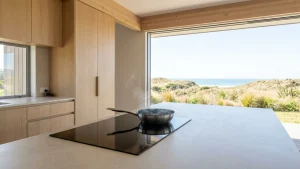
- Kitchen rangehoods should also vent outside. Recirculating rangehoods filter grease but don’t remove moisture.
- Run fans while you shower or cook, and for a while afterwards. A fan on a timer or a humidity sensor does this automatically.
- Clothes dryers should be vented outside or be a condensing or heat pump type.
For rental homes, the Healthy Homes Standards set minimums. Kitchen fans installed after 1 July 2019 need a 150mm diameter or an exhaust capacity of 50 litres per second. Bathroom fans need a 120mm diameter or 25 litres per second. They’re sensible benchmarks for any home.
Whole-home ventilation systems
If extraction alone isn’t enough, a whole-home ventilation system keeps air moving through the house.
Positive pressure systems draw air from the roof space, filter it and push it gently into the living areas, which pushes moist air out through gaps around windows and doors. They’re relatively affordable and popular in older homes. Their performance depends on the conditions in your roof space, so they’re not the right answer for every house.
Balanced systems with heat recovery bring fresh air in from outside and extract stale, moist air at the same time. A heat exchanger transfers warmth from the outgoing air to the incoming air, so you don’t lose as much heat. They cost more to install and suit newer, more airtight homes best.
Before recommending home ventilation for a Kapiti home, we look at how it’s built and where the moisture is coming from. Sometimes better extraction is all that’s needed.
Heating and ventilation work together
Ventilation removes moisture, but a cold house will still get condensation. Keeping the home at a steady, comfortable temperature makes a big difference, and a heat pump is one of the most efficient ways to do that. Many heat pumps also have a dry mode that pulls moisture out of the air.
A few habits help too: put lids on pots, dry washing outside or in a vented dryer, and open windows for a few minutes on dry, sunny days.
Quick answers
Is a home ventilation system worth it?
If you have ongoing condensation and mould despite good extraction and heating, a ventilation system can make a big difference. It’s worth getting the basics right first, then deciding.
Will a ventilation system make my house colder?
A well-designed system shouldn’t make the house noticeably colder. Drier air is also easier and cheaper to heat. Heat recovery systems keep much of the warmth inside.
Do I need an extractor fan in every bathroom?
Any room with a shower or bath benefits from a ducted extractor fan. It’s the most effective way to stop moisture spreading through the house.
Get your home dry this winter
Whittaker Electrical installs home ventilation systems, ducted extractor fans and heat pumps for homes across the Kapiti Coast.
Call us on 021 975 911 or send us a message, and we’ll arrange a time to come and take a look.