
The clocks went back on Sunday, and that makes this week the perfect time to check your smoke alarms. It takes a few minutes, and working smoke alarms give you the early warning you need to get everyone out safely. It’s also a good time to ask whether hard-wired smoke alarm installation would suit your Kapiti home.
Here’s a quick guide to testing them, where they should go, and when hard-wired alarms are worth considering.
Battery or hard-wired?
There are two main types of smoke alarm in New Zealand homes:
- Long-life battery alarms have a sealed battery that lasts the life of the alarm, around 10 years. They’re easy to install and a big improvement on older alarms with replaceable batteries.
- Hard-wired alarms run off your home’s power supply, usually with a backup battery. They’re installed by an electrician and don’t rely on anyone remembering to change batteries.
Hard-wired alarms can also be interconnected, so when one alarm detects smoke, every alarm in the house sounds. That’s a real advantage in bigger or multi-level homes, where you might not hear an alarm at the other end of the house. Some long-life battery alarms can be wirelessly interconnected too.
The Building Code requires smoke alarms in all new homes, and in existing homes when alteration work is carried out. If you’re renovating, it’s the ideal time to have hard-wired, interconnected alarms installed while the ceilings are accessible.
Where smoke alarms should go
BRANZ guidance for New Zealand homes recommends:
- An alarm in every bedroom, or within 3 metres of every bedroom door
- Alarms between living areas and sleeping areas, so they sound before escape routes fill with smoke
- At least one alarm on every level of the home
- Mounting on the ceiling or high on a wall, away from corners
Avoid kitchens, bathrooms and garages unless the alarm is designed for those spaces, as steam and cooking will set them off. Keep alarms away from heaters, damp areas and draughts from extractor fans.
How to test and look after them
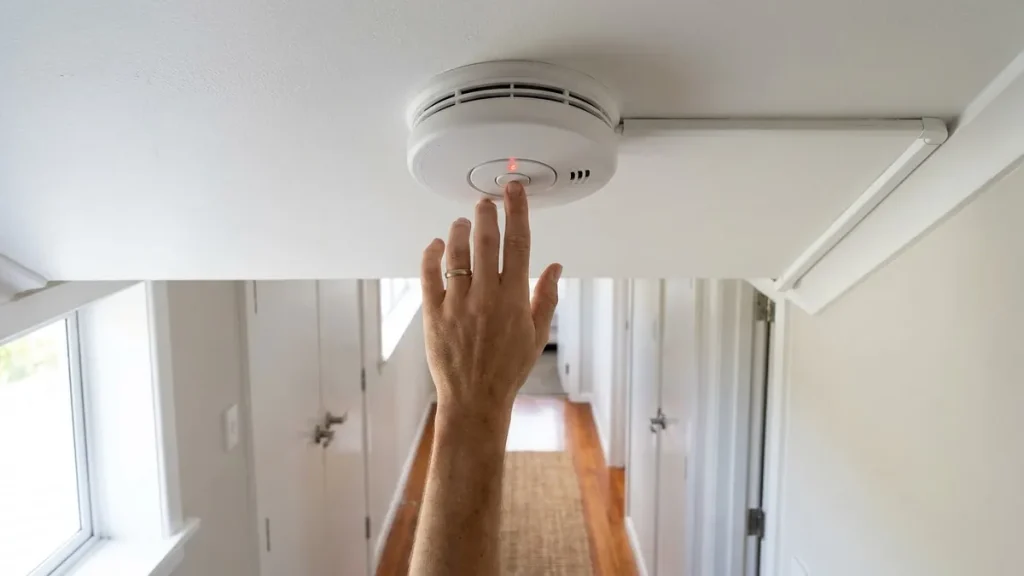
- Every month: press the test button and make sure the alarm sounds.
- Every six months: vacuum around the alarm to clear dust and insects.
- Every year: replace the battery if your alarms use replaceable batteries.
- Every 10 years: replace the alarms. They become less reliable with age, and most have an expiry date printed on them.
If an alarm chirps, sounds for no reason or doesn’t respond to the test button, replace it.
Smoke alarm rules for rental properties
Landlords have specific obligations. New smoke alarms in rentals must be photoelectric and either have a long-life battery or be hard-wired. There must be an alarm within 3 metres of each bedroom door, or in every room where someone sleeps, and on every level of a multi-storey home. Landlords must make sure alarms are working at the start of each tenancy, and tenants must not remove or disconnect them.
Quick answers
Can an electrician install hard-wired smoke alarms in an existing home?
Yes. For a hard-wired smoke alarm installation in an existing Kapiti home, we run cabling through the roof space to each alarm location, connect them to a suitable circuit and interconnect them so they all sound together.
Do I need interconnected smoke alarms?
They’re not required in existing homes, but they’re strongly recommended, especially in larger or multi-level homes where one alarm might not be heard everywhere.
How long do smoke alarms last?
Around 10 years. Check the expiry date on the back of each alarm and replace any that are past it.
Want hard-wired smoke alarms?
We carry out hard-wired, interconnected smoke alarm installation in homes across Kapiti, and can fit them as part of a renovation or an electrical inspection.
Call us on 021 975 911 or send us a message, and we’ll arrange a time to come and take a look.